
Surfaces That Prevent Slips Without Sacrificing Durability
Textured Floor Coatings in Clermont for garages, outdoor spaces, and work areas where traction directly affects safety
Optimal Floor Coatings applies textured floor coatings across residential and commercial properties in Clermont, creating surfaces that resist slipping even when wet or contaminated with oil, dust, or debris. You need this when garage floors, workshop areas, or exterior walkways become hazardous during rain, after washing vehicles, or when fluids accumulate. The texture embedded into the coating provides grip underfoot while maintaining the chemical resistance and impact durability that untextured systems offer.
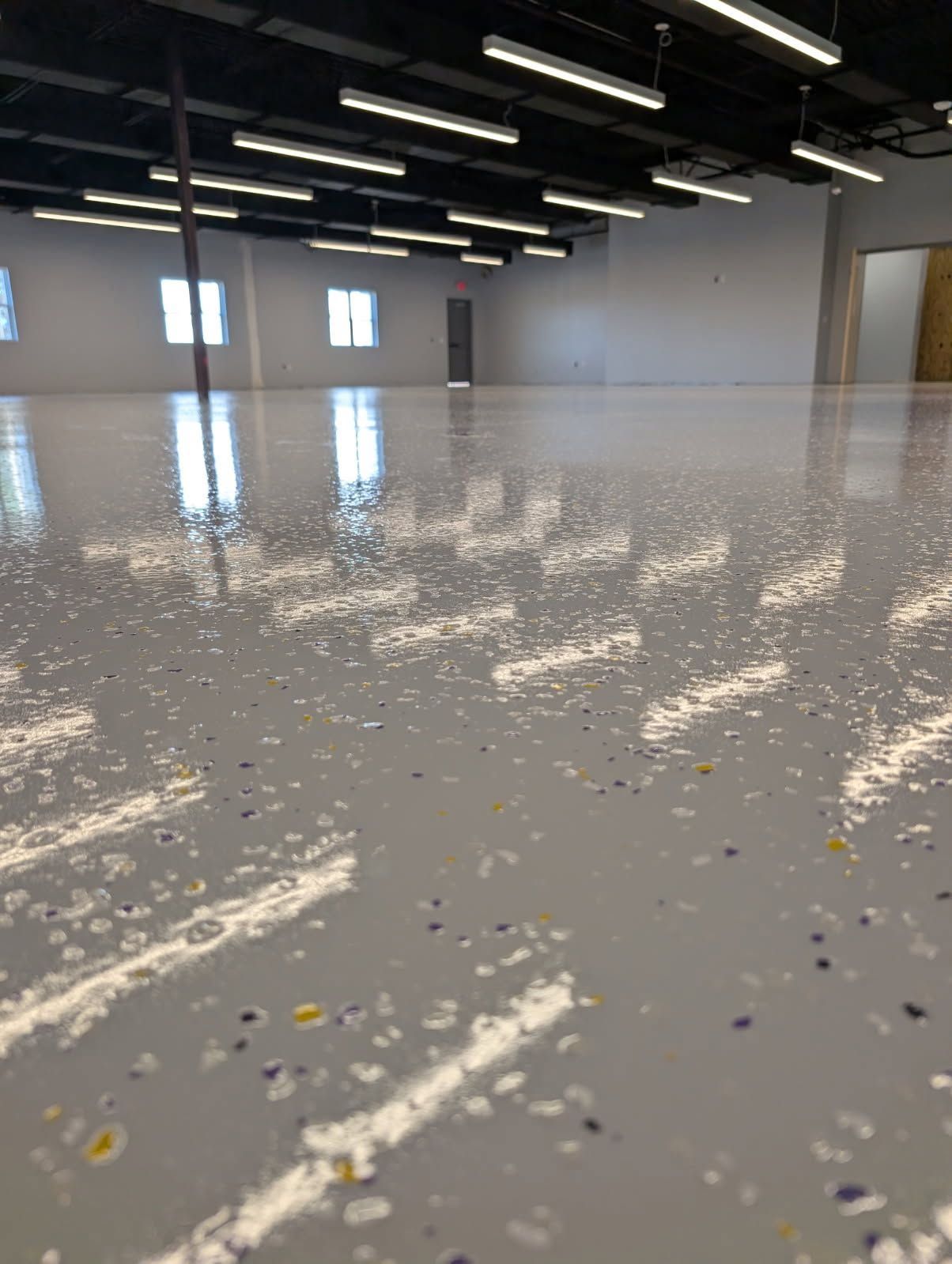
The process involves broadcasting aggregate material into the wet coating layer during application, creating a roughened surface profile that increases friction. The depth and coarseness of texture can be adjusted based on the environment: lighter texture for interior garage floors where you walk regularly, heavier texture for exterior work zones or areas exposed to standing water. Proper surface preparation before coating ensures the textured layer bonds completely, preventing delamination under foot traffic or rolling equipment.
Schedule a property evaluation to identify specific areas where slip resistance would improve daily safety.
What Proper Textured Coating Installation Requires
The concrete surface must be ground and cleaned to remove contaminants, existing sealers, or laitance that would prevent adhesion. The base coat is applied first, followed immediately by the texture aggregate broadcast, then a topcoat seals the aggregate in place once cured. The timing between these layers matters: broadcast too early and aggregate sinks unevenly, too late and it doesn't embed properly.
After installation cures, you'll notice immediate traction improvement when walking across previously slick surfaces, especially in wet conditions. Garage floors no longer become skating rinks after washing cars or during humid Florida mornings when condensation forms. Outdoor spaces maintain grip during afternoon thunderstorms common in Central Florida, and work areas stay safer when oils or coolants spill. The texture remains consistent across the surface without creating rough patches that catch on equipment or create uneven wear patterns.
Texture options range from fine sand finishes suitable for barefoot areas to coarse aggregates designed for heavy equipment zones. The coating system itself resists UV degradation, thermal cycling, and chemical exposure, so the slip-resistant properties don't diminish as the surface ages. Decorative color options allow the textured finish to complement surrounding architectural elements rather than looking purely utilitarian.
What Property Owners Usually Ask
These questions come up frequently when property owners consider adding slip resistance to concrete surfaces.
How does texture level affect cleaning and maintenance?
Heavier textures trap more dirt and require pressure washing or scrubbing to clean completely, while lighter textures can be swept and mopped like smooth surfaces, so your maintenance approach should match the texture depth you choose based on safety needs versus cleaning convenience.
What happens if the textured coating wears down over time?
The aggregate is fully encapsulated in the topcoat layer, so normal foot traffic won't dislodge it, but high-abrasion zones like vehicle turning paths may polish smooth after years of use, at which point those specific areas can be recoated without redoing the entire floor.
Can textured coatings be applied to outdoor surfaces that get full sun exposure?
The coating systems used in Clermont are formulated to resist UV breakdown and thermal expansion common in Florida's climate, maintaining both texture integrity and slip resistance even on south-facing pool decks or lanai floors that receive direct sunlight year-round.
Why does surface preparation matter more for textured coatings than smooth finishes?
Any delamination or bond failure gets magnified under the stress of textured surfaces where foot traffic creates shear forces at different angles, so contamination, moisture, or weak concrete must be addressed before coating to prevent sections from lifting or peeling under use.
What texture level works best for spaces used barefoot versus work boots?
Fine textures provide enough grip for bare feet without feeling uncomfortable, while coarse aggregates suitable for work boots or outdoor equipment areas would be too abrasive for barefoot use, so the application determines the appropriate aggregate size and broadcast density.
Optimal Floor Coatings matches texture specifications to how each space is actually used, ensuring safety improvements don't create new problems. Request a detailed estimate based on your specific flooring areas and traffic patterns.