Driveways Built to Handle Florida Weather
Driveway Floor Coating in Clermont for concrete surfaces exposed to daily vehicle traffic, sun damage, and seasonal rain
Uncoated concrete driveways in Central Florida absorb moisture during the rainy season, then expand and contract as temperatures swing between morning humidity and afternoon heat, creating surface deterioration that shows up as spalling, cracking, or staining from tires and fluids. Optimal Floor Coatings installs coating systems designed specifically for exterior environments, creating a sealed barrier that prevents water infiltration while resisting the UV exposure and thermal cycling that degrades untreated concrete. You see the difference immediately in how the surface sheds water instead of absorbing it and how tire marks wipe away instead of staining permanently into porous concrete.
The coating process begins with surface preparation that removes any existing sealers, oils, or damaged concrete, then profiles the surface to accept the coating system. Multiple layers are applied: a primer that penetrates and bonds to the concrete, a base coat that builds thickness and color, and a UV-resistant topcoat that handles tire traffic and weather exposure. The system flexes with the concrete as it expands and contracts, preventing the coating from cracking or delaminating during temperature changes.
Arrange an on-site driveway evaluation to assess current surface condition and preparation requirements.
What Changes After Coating Installation Completes
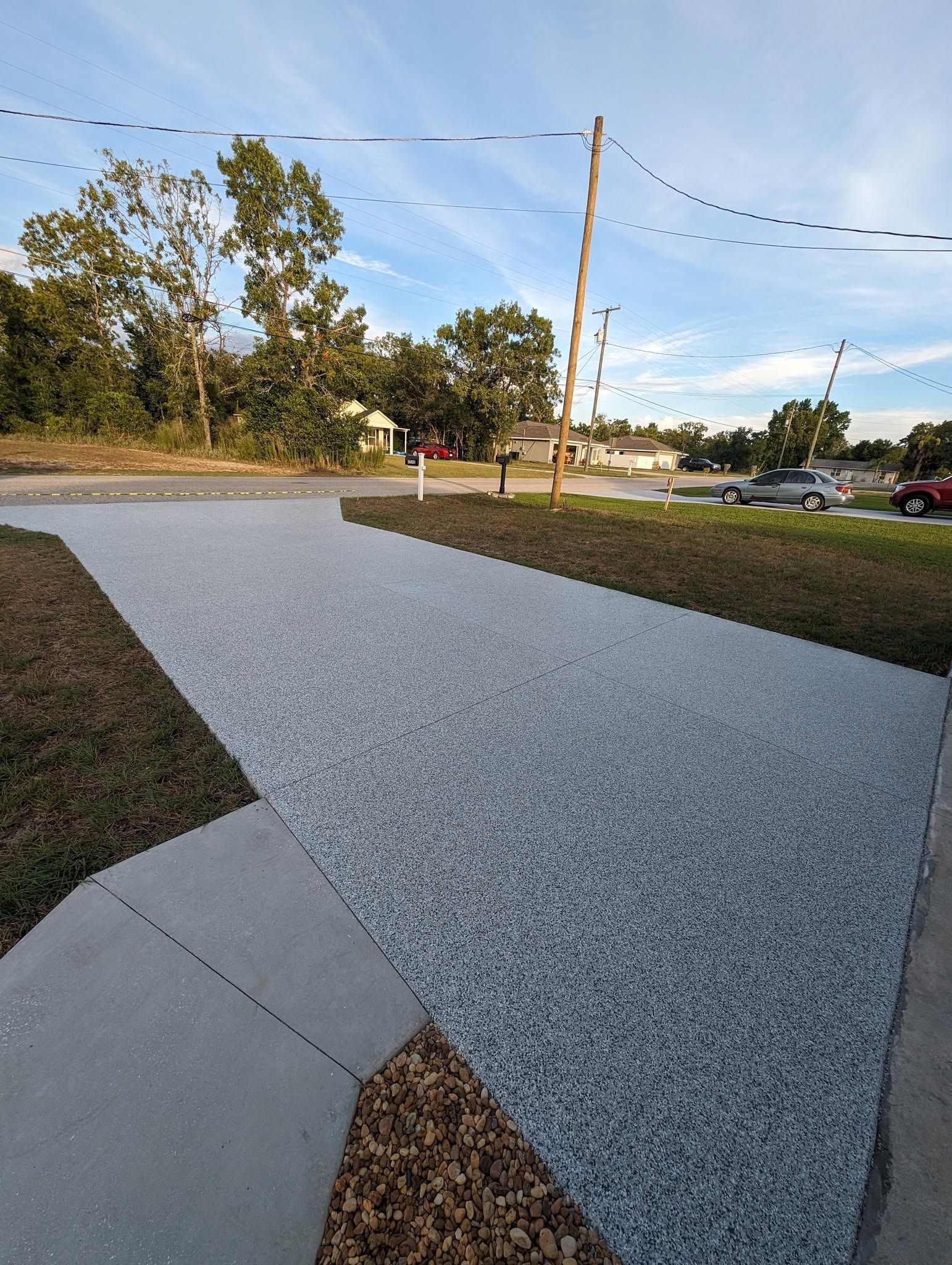
The driveway surface becomes non-porous, so rainwater beads and runs off instead of soaking in and carrying contaminants deeper into the concrete. Oil drips, transmission fluid, and tire rubber no longer penetrate and stain because the coating creates a chemical-resistant barrier that can be cleaned with basic degreasers. The surface also stops shedding the fine concrete dust that untreated driveways release as the top layer slowly erodes under traffic.
Curb appeal improves visibly because the coating restores uniform color and hides the patchy discoloration that develops on aging concrete from rust stains, mildew growth, and uneven weathering. The finish can be customized with solid colors, decorative flakes, or patterns that complement the home's exterior rather than leaving the utilitarian gray concrete exposed. Hot tire pickup—where tires leave marks on softened coating during extreme heat—is prevented by formulations designed for Florida's summer pavement temperatures.
The coating system doesn't eliminate the need for crack repair if the underlying concrete has structural movement, but it does seal hairline cracks and prevents them from widening due to water infiltration and freeze-thaw cycles. Proper installation includes addressing any existing surface damage before coating so that the finished driveway performs correctly from the start. Maintenance involves occasional pressure washing and reapplication of topcoat layers every few years depending on traffic volume.
Answers to Frequent Service Questions
Property owners in Clermont typically want to know how coating systems hold up under specific driveway conditions before committing to installation.
How long before the driveway can handle vehicle traffic after coating?
The curing process requires keeping vehicles off the surface while the coating chemically hardens, and the timeline depends on temperature and humidity levels, but planning for several days without driveway access ensures the coating reaches full strength before being loaded.
What surface issues disqualify a driveway from being coated?
Active structural cracking, severe spalling where concrete has broken away in chunks, or surfaces with significant settling and drainage problems need repair before coating, since the coating system seals and protects but doesn't provide structural reinforcement or correct underlying foundation issues.
Why do some driveways show coating failure after a few years?
Inadequate surface preparation is the primary cause—coatings applied over contaminated concrete, existing sealers, or improperly profiled surfaces will eventually delaminate because the bond never formed correctly, which is why proper grinding and cleaning before installation determines long-term performance.
Can coatings be applied during Central Florida's rainy season?
Surface moisture content must be below specific thresholds for coating adhesion to occur, so installation timing depends on weather patterns and the ability to keep the surface dry during preparation and application, making drier months more predictable for scheduling though proper surface testing can identify suitable windows year-round.
What maintenance extends the life of driveway coatings?
Regular cleaning prevents buildup of contaminants that can chemically attack the topcoat, and reapplying the UV-resistant topcoat layer every few years restores the protective barrier without requiring complete coating removal and reinstallation, maintaining appearance and protection at lower cost than full replacement.
Optimal Floor Coatings handles surface preparation and coating installation with attention to the specific challenges Central Florida's climate creates. Request a consultation to review your driveway's current condition and coating options.