Floors That Handle Real Workshop Use
Flake Polyaspartic Floor Coating in Clermont for garages that endure daily spills and heavy equipment
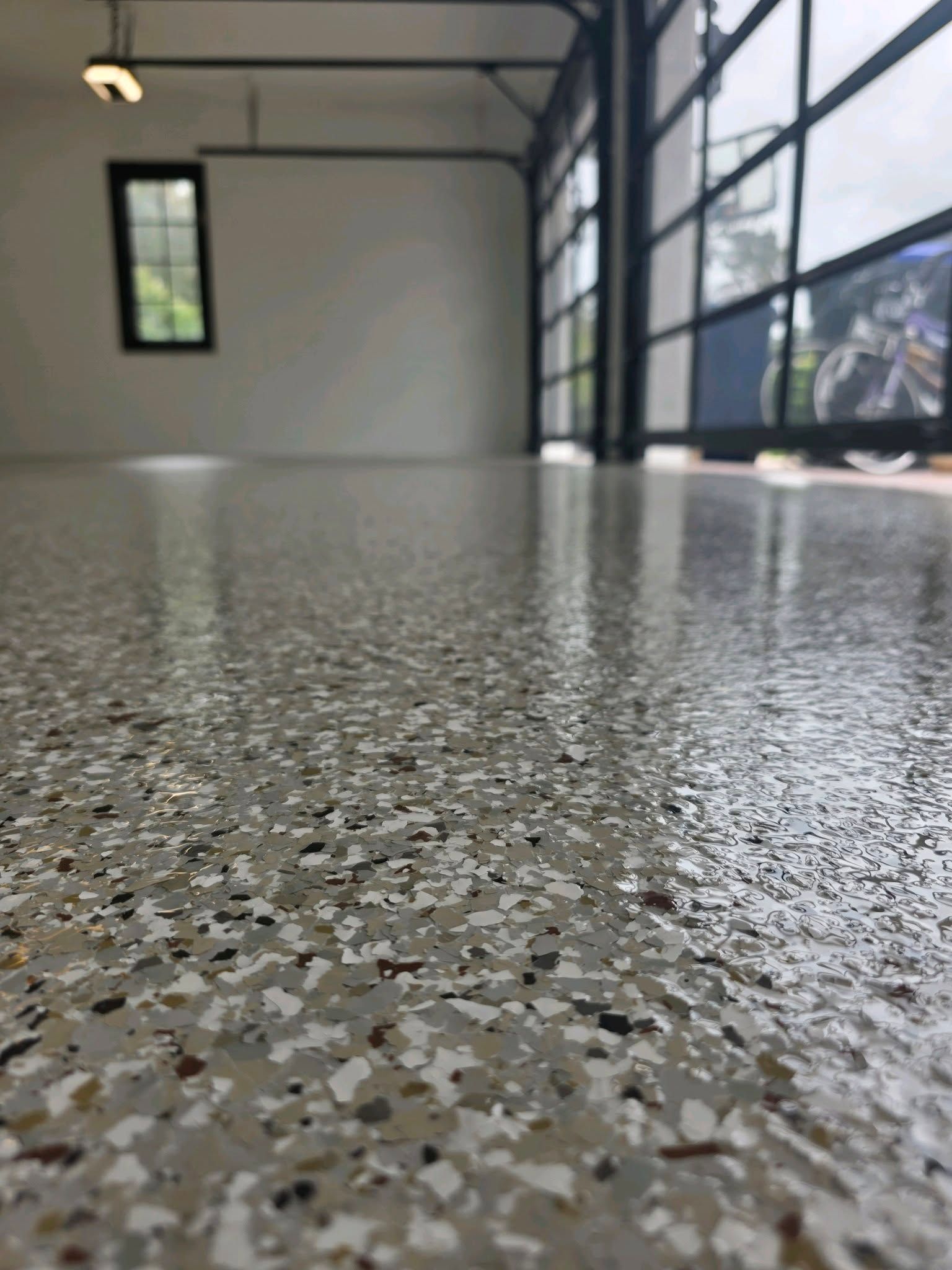
Optimal Floor Coatings applies flake polyaspartic systems to garage and concrete surfaces across Clermont and Central Florida, creating finished floors built to resist tire marks, oil stains, and the constant wear that comes from vehicle traffic and workshop activity. The multi-layer installation process embeds decorative flakes into the coating before sealing everything beneath a protective topcoat that hardens quickly and holds up under heat, moisture, and chemical exposure. Homeowners working on vehicles or running home-based shops need flooring that stays intact when tools drop, fluids leak, and heavy loads shift across the surface.
The installation begins with surface preparation, which determines how well the coating adheres and how long it performs. Properly prepared concrete means grinding down to expose clean, open pores that allow the polyaspartic material to bond mechanically rather than just sitting on top of the slab. Flake systems layer colored vinyl chips between coats, adding texture that reduces slip while creating visual depth across the floor.
Schedule a consultation to evaluate your concrete condition and discuss flake patterns suitable for your garage layout.
What Changes After the Coating Cures
The polyaspartic topcoat cures fast enough that many standard garage installations finish within a day, allowing you to park vehicles and resume normal use without waiting through extended downtime. The sealed surface resists staining from motor oil, transmission fluid, antifreeze, and other automotive chemicals that would otherwise soak into bare concrete and leave permanent discoloration. Maintenance becomes simpler because spills wipe away instead of absorbing into the porous concrete substrate.
You notice the floor stays cleaner with basic sweeping and occasional mopping, and the embedded flakes hide minor dirt accumulation between cleanings. The coating reflects overhead lighting better than raw concrete, brightening the workspace without adding fixtures. Surface durability means tire scuffing and dragged equipment leave minimal marking compared to uncoated slabs that show every scrape and track pattern over time.
The flake system works for residential garages, commercial workshops, and specialty spaces where both appearance and function matter. Color and flake density can vary based on the look you want, from subtle blends that mimic natural stone to bold contrasts that define work zones visually. Polyaspartic coatings cure under a wider temperature range than traditional epoxy, which matters in Central Florida where garage temperatures fluctuate and humidity stays high year-round.
Common Questions About This Service
Property owners in Clermont frequently ask about installation timelines, surface preparation requirements, and how flake coatings perform under Florida heat and moisture.
What preparation happens before the coating goes down?
The concrete gets ground to remove any existing sealers, contaminants, or weak surface layers, then cracks and damage get repaired so the coating bonds to structurally sound material.
How does polyaspartic coating differ from standard garage floor epoxy?
Polyaspartic material cures faster and tolerates higher temperatures during application and use, which makes it more versatile for Florida installations where garages heat up significantly during summer months.
Why do flake systems include multiple layers instead of a single coat?
The base coat provides adhesion, the broadcast flakes add texture and color, and the topcoat seals everything together while providing the chemical resistance and UV stability that protect the finish long-term.
When should coating happen after new concrete gets poured?
Most concrete needs at least 28 days to cure fully before coating, though actual timing depends on slab thickness, weather conditions, and moisture levels measured at the surface.
What maintenance keeps the coating performing well over years?
Regular sweeping removes abrasive grit that can dull the finish, and periodic mopping with mild cleaners removes oils and residues without breaking down the topcoat chemistry.
Optimal Floor Coatings evaluates concrete conditions before recommending specific flake patterns and coating formulations suited to your garage use. Request a free consultation to review preparation needs and project timelines for your property.